
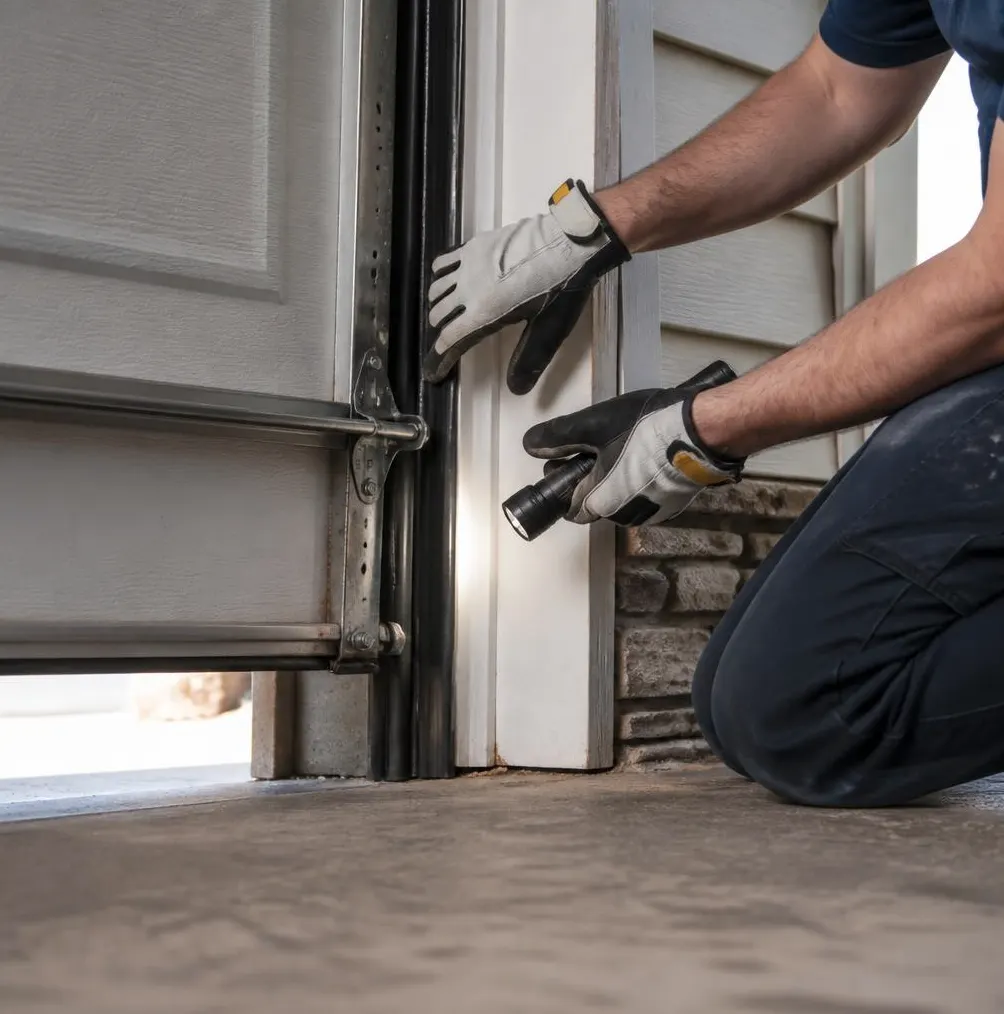
Short answer: pull the red emergency release cord hanging from the trolley to disconnect the door from the opener, then lift or lower the door by hand. When power returns, pull the cord again (or push it, depending on your model) until the carriage clicks back into the track, then run the opener through one full cycle to confirm it's reconnected.
Central Texas storms don't give much warning. A line of severe weather rolls through, the power flickers out, and suddenly you're stuck with a two-ton door you can't open with the wall button. Knowing the manual release process ahead of time means you're not figuring it out in the dark with a flashlight in your teeth.
Tools You'll Need
- A flashlight or headlamp (phone flashlight works in a pinch)
- Work gloves, for grip and to protect your hands from the track and springs
- A step stool, if the release cord is out of easy reach
That's it. No wrenches, no drills. The manual release system is built for exactly this situation.
How to Open the Door Manually
- Make sure the door is fully closed first, if possible. It's much safer and easier to engage the manual release when the door is down and the springs are at rest.
- Locate the emergency release cord. It's the red rope hanging from the trolley on the opener rail, usually a foot or two above the door.
- Pull the cord straight down firmly. You'll hear a click as the trolley disconnects from the drive carriage. The door is now free of the opener.
- Lift the door slowly using the handle, not the panels. A properly balanced door should rise with moderate effort and stay open partway on its own. If it feels unusually heavy, slams down, or won't stay up, stop — that's a sign of a broken or weakened spring, not a power problem, and it's not safe to keep forcing it.
- Prop the door open if you need it to stay up while you load the car or move things in or out, especially if the spring tension feels off.
How to Close the Door Manually
- Lower the door slowly by the handle, guiding it down rather than letting it drop. A well-balanced door descends smoothly and evenly on both sides.
- Check that it seats fully against the floor and that the bottom seal makes contact all the way across. A door that doesn't close flush is an easy entry point for dust, wind-driven rain, and the kind of hail that comes sideways in a bad thunderstorm.
- Lock it manually if you'll be away or it's overnight. With the opener disconnected, the automatic lock won't engage, so use the manual slide lock or a C-clamp on the track above a roller as a temporary measure if you're concerned about security during an extended outage.
Re-Engaging the Opener Once Power Is Back
- Confirm the door is fully closed before you reconnect, so the trolley and carriage line up the way they're designed to.
- Pull the emergency release cord toward the door (or straight down again, depending on your model) to shift the trolley back into the locked position. Many openers have a small lever or arrow on the trolley showing which direction re-engages it.
- Use the wall button or remote to run the door through one full open-close cycle. Listen for the motor; it should sound normal, not straining.
- Watch the travel. The door should open and close through its full, normal range and reverse properly if it hits an obstruction. If it stops short, reverses unexpectedly, or the trolley won't catch, the opener may need a technician's attention.
What You Can Handle vs. What Needs a Technician
Releasing, lifting, lowering, and reconnecting the trolley are all normal homeowner tasks — that system exists for exactly this scenario. Where to stop and call for help:
- The door feels heavy, uneven, or won't stay partway open. That points to spring trouble, and torsion springs are under enough tension to cause serious injury if handled without the right tools.
- The trolley won't reconnect, or the opener runs but the door doesn't move with it. Could be a stripped gear, a disconnected arm, or a worn drive belt or chain.
- The door came off track during the outage from someone forcing it manually. Don't keep working it — a derailed door can jump the track further and damage the panels or the opener.
- Repeated outages are wearing on an older opener that was already struggling with the heat before the storm hit.
When to Call Austin Garage Door
If the manual release won't catch, the door binds partway through its travel, or you notice a cable looks frayed or a spring looks stretched after working the door by hand, stop and call us before the next outage puts more strain on it. We handle garage door opener repair and installation for every major brand, and if the issue turns out to be spring-related, our spring replacement service gets the tension and balance back to factory spec safely — not something to attempt with a step stool and good intentions. We serve Austin, Round Rock, Cedar Park, Pflugerville, Georgetown, Leander, Lakeway, and Bee Cave, and we show up ready to diagnose it the first visit.
If your garage door gave you trouble during the last storm, don't wait for the next one. Call Austin Garage Door today and get it fixed right.